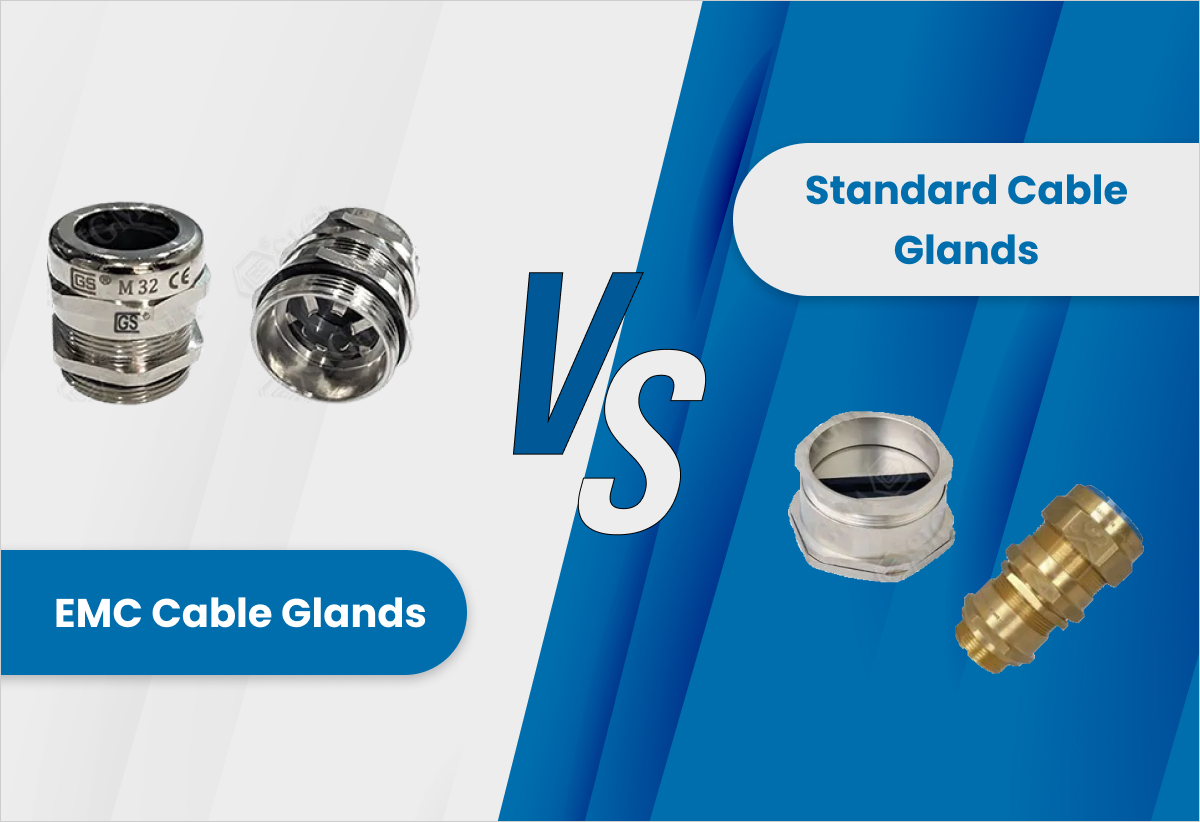
In modern electrical and electronic installations, selecting the right cable gland is essential for ensuring safety, performance, and long-term reliability. While standard cable glands provide basic sealing and mechanical protection, EMC cable glands are specifically designed to reduce electromagnetic interference (EMI) and protect sensitive signals. Solutions from a trusted and leading cable glands manufacturer – CGS Cable Glands help to meet the demands of both everyday applications and high-performance, EMI-sensitive environments.
Standard Cable Glands: Best for basic protection
- Seal cable ends and securely attach them to plugs, terminals, enclosures, or electrical equipment.
- Provide basic mechanical protection for cables.
- Help protect sensitive wiring against contamination, corrosion, and flammable gases.
EMC Cable Glands: The right choice for compliance-driven projects
- Limits electromagnetic emissions that could disrupt other devices.
- Ensures equipment remains immune to external interference.
- Mitigates the rising occurrence of electromagnetic interference (EMI).
- Maintains reliable and uninterrupted operations across installations.
The Role of EMC Cable Glands in system protection
EMC cable glands protect equipment from electromagnetic interference, ensuring effective EMC protection at cable-to-enclosure transitions by acting like a Faraday cage.
How they work?:
- Shielding Continuity: Connect the cable’s sheath to the enclosure ground, forming a closed Faraday cage.
- Interference Management: Metal contacts link with the cable’s shielding to divert EMI to ground.
- System Protection: Discharge interference currents before they reach the enclosure, preventing disruptions.
Comparison
| Feature | Standard Cable Glands | EMC Cable Glands |
|---|---|---|
| Purpose | Providing strain relief, sealing against environmental factors, and ensuring a robust connection, harsh or industrial environments. | Protect electrical equipment from electromagnetic interference (EMI) by ensuring a secure and shielded connection. |
| Material | Generally made from Stainless steel, Aluminum, and Brass. | Generally made from Brass (Nickle Plated), Stainless steel, with conductive coatings or integrated shielding components. |
| Construction | Simple design for standard cable protection. | Includes special conductive elements (e.g., contact springs) to ensure grounding and shielding. |
| Application | Used in general electrical installations, outdoor environments, and industrial settings. | Used in high EMI, such as automation, telecommunications, and control panels. |
| Installation | Simple installation, requiring basic tightening. | Requires proper grounding and right positioning for effective shielding. |
| Cost | Generally lower cost. | More expensive due to additional shielding and materials. |
| Standards & Compliance | Meets standard IP ratings for dust and moisture protection. | Complies with EMC regulations and shielding requirements for sensitive electronics. |
Application in various industries
Standard Cable Glands:
- Oil and Gas: They are utilized in the demanding environments of oil refineries, safeguarding cables from chemicals, extreme temperatures, and mechanical damage.
- Renewable Energy: Protects cables in solar and hydro plants from moisture, mechanical stress, and harsh environments.
- Food and Beverage: Prevents contaminants from entering cable connections, ensuring hygiene and safety.
- Pharmaceutical: Maintains sterile conditions in clean rooms and labs with secure cable connections.
- Transportation: Shields cables in heavy vehicles and rail systems from vibration, stress, and environmental exposure.
- Chemical and Petrochemical: Protects cables from corrosive chemicals, high heat, and mechanical damage, securing connections in processing facilities and storage areas.
EMC Cable Glands
- Telecommunication: EMC cable glands protect cables from EMI, ensuring stable signal transmission in cell towers and fiber-optic networks.
- Industrial Automation: In factories, EMC glands shield cables from heavy machinery EMI, maintaining smooth data flow for automated systems and robots.
- Medical Equipment: EMC cable glands safeguard sensitive devices like CT and MRI machines, ensuring accurate readings and safe operation.
- Aerospace: Used in aircraft, satellites, and military systems, EMC glands protect critical communications and controls from interference.
- Railways: EMC cable glands shield signaling, communication, and power systems from EMI caused by overhead lines and moving trains, ensuring safety.
- Data Centers: EMC glands secure cable connections and prevent EMI from affecting servers and data storage performance.
The IEC standards for Cable Glands
The International Electrotechnical Commission (IEC) sets global standards for electrical and electronic technologies, ensuring safety, efficiency, and interoperability. For cable glands, IEC standards specify protection levels, environmental resistance, and mechanical durability.
Key standards include:
- IEC 62444: General requirements for cable glands in electrical installations.
- IEC 60079-0: Requirements for electrical equipment in explosive atmospheres.
- IEC 60529: Ingress Protection (IP) ratings for dust and water resistance.
Conclusion
EMC cable glands are built to reduce electromagnetic interference and protect signal integrity in electrically noisy or regulated environments, while standard cable glands handle basic sealing and strain relief for everyday applications. For reliable performance and certified quality across both options, contact thecable glands manufacturer – CGS Cable Glands, offers dependable, customer-centric solutions with a wide range of options and customization to suit specific application requirements and client needs. Email us at info@cgscableglands.com or request a quote for custom cable glands, and our team will help you.